East of Eden

Some pieces of literature just stay with you. Maybe it’s when we read them, maybe it’s who recommended them to us, maybe it is something undeniable about the work itself, but for whatever reason we pick these things up and carry them with us.

My first exposure to John Steinbeck, as for many Brits of my generation, was being forced to read ‘Of Mice and Men’ while studying GCSE English. There’s nothing like taking an exam on a book to suck out any joy from it. For better or worse, however, I think I could still answer an essay question on the text almost thirty years later…

Later on, GCSEs a distant memory, in a flurry of Americana, I came back to Steinbeck. I can’t tell you exactly when I started reading East of Eden, regarded by many as his masterpiece, but it was one of those literary experiences where the fabric of the literary world created made me instantly comfortable. Despite the 600 page length of the tome, I was hooked.

While on a long walking trip this year, I listened to the audio book of East of Eden and was reminded of why I remember this book so fondly. When I saw that it was also coming out on Netflix in a new mini-series, I had another reason to come back to the story. It has been an enjoyable experience to talk to friends old and new about it, whether they have slogged through all 600 pages in readiness for the new adaptation, or have just become aware of the novel for the first time.

I think the decision to have the book narrated makes it a very easy story to access. In the novel it is narrated by a grandchild of the central character Samuel Harrison (who is also perhaps Steinbeck himself). In the new TV adaptation, Cathy Ames narrates instead – a decision I was initially shocked by, but on reflection makes sense for the lense that the new show casts over the story.

We all like being told a story. It takes us back to being children and listening to our parents or teachers read to us. I know from my experience as a teacher that even adolescents understand more of what they hear than what they read. Steinbeck tells us the story of East of Eden in a sweeping multi-generational arc, encapsulating the lives of several families across the turn of the 20th Century, mostly in the Salinas valley of California (where Steinbeck lived).

There are ways in which the story is a series of cycles. Fathers and brothers, parents and children, over generations and asking the same questions – can we change? Are we born monsters? What do we pass on to our children and are we doomed to repear the destructive patterns of our forebears?

Through the stories of the Hamiltons, the Trasks and their children, Steinbeck paints a picture of unruly and complicated family life, with the highs and lows that go with it. From the comic antics of the Hamilton boys stealing their ma’s couch, to the fear of flying that beset one of their sisters later in life, to the deadly serious and sinister implications of Cathy’s destructive path through the lives of others in search of an uncertain and elusive independence, the story is often episodic and meandering. But rather than become tiresome, I found that this more fully paints a world of complex diverse characters. The central role played by Lee, a Chinese American in a time of intense racism, is notable, particularly as the story reaches its conclusion.

Cathy is introduced in the following way to the story – note the way Steinbeck even uses ‘I’ as the narrator of the story –

I believe there are monsters born in the world to human parents. Some you can see, misshapen and horrible, with huge heads or tiny bodies; some are born with no arms, no legs, some with three arms, some with tails or mouths in odd places. They are accidents and no one’s fault, as used to be thought. Once they were considered the visible punishment for concealed sins.

And then continues a little later –

It is my belief that Cathy Ames was born with the tendencies, or lack of them, which drove and forced her all of her life. Some balance wheel was misweighed, some gear out of ratio. She was not like other people, never was from birth. And just as a cripple may learn to utilize his lack so that he becomes more effective in a limited field than the uncrippled, so did Cathy, using her difference, make a painful and bewildering stir in her world.

When I saw that Florence Pugh was front and centre in every way in the new adaptation of East of Eden – as the face of the show, on the inevitable tie-in edition of the book etc. – as the latest incarnation of Cathy, I was curious and honestly nervous. How can a character written in such a sociopathic fashion be the hero of a story? The first episode starts with Cathy’s narration based on the above quotation from Steinbeck’s original, casting the story as a whole a consideration of monsters and women/men. Once I relaxed into the adaptation I was able to enjoy the reinterpretation of Cathy’s role as an abused women caught in the misogynistic world of 20th Century America – in the show young Cathy is shown being led into the woods by an older boy, insinuating an experience of childhood sexual abuse that is not there in the book (where she is shown manipulating and falsely accusing men).

Cathy is still captivating in her manipulation of those around her, but she is also shown to be a victim of the sexist system in which she is trapped, and which has a very fixed set of expectations of what a women can be and do. None of which involve financial security and independence – the thing that she seems to want the most. Even those who love her – most notably her husband Adam Trask – cannot see her for who she is. Even her monstrous parts do not mean she is a vessel or prop for their hopes and dreams. Her ruthless escape from her otherwise idealised childhood, then later her married life, are undeniably shocking, but made more sense to me in this latest adaptation. What Cathy wants more than anything, and what is denied her, is her independence. Freedom from even the well-meaning men in her life who project onto her what they want to see.

The new adaptation stretched credulity for me a little in the final episode or two with the decision to have Adam’s brother Charles appear to Cathy as a ghostly manifestation of her unravelling sanity, or perhaps as a spectre of lost love – Charles is portrayed in the book, and more so in the TV show, as the only one who could truly have understood Cathy; her equal in some way. It seems a similar decision to the 1955 film adaptation of story, which leans heavily into a love-triangle storyline about Adam and Cathy’s sons and their on/off again love interest Abra. Maybe Cathy is haunted by her lost love or regrets about the ways she has lived, but it seemed a little neat to have Charles be physically manifest in that (I wonder if the filmmakers just wanted more of the admittedly excellent Mike Feist in the role).

On the whole, the new adaptation was highly enjoyable, making the themes and ideas of the original story fresh and vital. The last section of the story, focused on the Trask sons Aron and Cal, was also handled well, made all the better for restoring Lee’s central part to the Trask family and even giving us a view of his travels to San Francisco. Interestingly, the creative mind behind the new series, Zoe Kazan, is the granddaughter of director Elia Kazan who directed the 1955 adaptation – an adaptation which solely focuses on the final section of the story, on the cusp of WW1. Most famous for James Dean’s iconic portrayal of Cal Trask, this version is limited by its short run-time, but still powerfully captures the brotherly rivalry and desperate need for a father’s love that is also shown, somewhat more sympathetically, in the new adaptation.

All in all, I have relished the opportunity to think afresh about this story I love, and can only hope that more people than ever can approach this timeless story and consider what it might mean to them. After all, as Lee says, it is our choices which make us.
So I’ve been wondering

I’m sure we all have our cultural blindspots. Bits of ubiquitous popular culture that we’re aware of, but have never really engaged in. One of those for me has long been Sex and the City. I could reference some key characters and ideas, tell you that the reboot and second film were rubbish, but not really much more than that. Oh, and that Geri Haliwell cameo.

While visiting a friend in, where else, New York City this summer I was challenged to rectify this oversight. We watched the infamous episode – actually one of the show’s last – when washed up party girl Lexi Featherston tumbles out of a window with a Splat! ‘Why is no one fun anymore?’ I enjoyed the experience, but had many questions. So I took seriously the challenge from my friend to watch the whole thing.

Cut to about three months later and I have just finished watching all six seasons, 2 movies and many podcasts. I couldn’t help but wonder, why have I waited so long to consume this wonderful show?

I’m sure all of us have been asked, with varying degrees of scepticism or eye rolling, whether we are a Miranda, a Charlotte, a Samantha or heaven forbid a Carrie. So much of the success of the show is that these women represented for a generation of women (and gay men…) archetypes that could encompass a vast and varied experience. That a hugely-successful show centred female friendship, and had women who, though on the surface were searching for love, were really choosing each other again and again, was and remains remarkable.

I think I chose the right time to watch this show for the first time. I may not be living an it girl lifestyle in New York, but I am a single person in his later thirties who has to navigate the world of societal expectations and 2.4 kids. Many of my generation grew up with this show and Carrie Bradshaw represented an aspirational idea of what being a grown up would look like. For me, I have come to Carrie et al not as an eighteen year old dreaming of my future, but as a millennial struggling through the landscape of ‘is this it?’

So many of the stories that the women of Sex and the City face are all about expectations. Their own expectations of themselves, their friends and the men in their lives. The expectations of the world around them. Not to mention the expectations and pressures of work, gender and love. These are things that have been at the forefront of my mind even before I started watching the show and I felt myself seen and heard in the stories of the women of Manhattan.

As I get older and see the different paths that lives can take around me, it is harder than ever to be content with the particular set of opportunities and challenges I have been dealt. I sometimes feel shut out of the more ‘conventional’ life choices of those with partners, children and a seemingly settled life. Yet I struggle with the idea of settling myself, as I have enjoyed the opportunities afforded me through being single and relatively carefree. It’s a bit like when Carrie has her Manolos stolen at an affluent friend’s baby shower – her friend simply cannot understand Carrie’s life and the value the shoes hold.

So many of the stories in Sex and the City’s 6 seasons are about these four friends grappling with what they want, accepting what they have, and coming back to each other through it all. One of the most moving moments for me is when Miranda, after years of cynicism, gently cares for her mother in law at the show’s end. She has learned to open herself up.

Without a doubt my favourite man in the show is Steve. When he says to Miranda ‘I love having your friends over’, I could shed a tear for a partner eager to accept the other as they are, including recognising that their friends are their family too.

These women, through it all, come back to each other. Sat at that table in the cafe. When Miranda shares her pregnancy while Charlotte is struggling with her fertility. When Samantha shares her cancer diagnosis (even at Miranda’s wedding – they are family, it needs to be discussed right away). When Carrie has yet another Big-related realisation or crisis – no matter what, they chose each other.

I know I have some people, friends and family, in my life who I choose to come back to. It’s hard when we move, things change, paths diverge. But I hope that we can all find those to return to time and again. Even if we don’t have wardrobes to match Carrie, we all need to find community and love like hers.

‘Go get our girl.’

The Unlived Life

As I’m sure many of you have been (and SHOULD BE), I’ve been watching the wonderful series ‘The Crown’ over the last week. As a Brit who feels fairly ambivalent about the monarchy most of the time, it’s incredible how some patriotic pomp can bring a tear to my eye, like some kind of collective memory. Perhaps they’re tears for some bygone age of Britishness, perhaps out of a national pride which feels all too rare these days. In one of this series’ best episodes, Aberfan, it was simple grief and horror at the terrible tragedy portrayed. Yet I think what gets me most is the simple fact that it is a drama about family. About a family in an extraordinary situation, but a family none-the-less.

One of the moments that stood out for me as I have been watching was when the Queen spoke of her dreams of the ‘unlived life’. It’s been an ongoing theme of the show that these people are stopped from being who they could otherwise be by the situation they find themselves in. Yes, they have extraordinary privilege, but also overwhelming pressure. The pressure to be completely visible and yet completely unavailable. To have no opinions and no slip-ups. Ever.

For the Queen, it is the simple dream of an unlived life as a horse-breeder. For Prince Charles, to be free of the pressure and expectation of waiting for his mother to die, and to be able to marry the woman he loves. For Princess Margaret, it’s simply to find personal happiness.

This theme of the unlived life struck me as it’s something I think we all feel. We all dwell on the roads not taken, the choices we might have made. That feeling of ‘everything would be better if…’

Perhaps a difference for the Windsors is that there is no way out for them. For us, these feelings often take the form of regrets. We always wonder if there’s a way to change our situation, to rectify mistakes. Of course, as we are not under the incredible pressure the characters in The Crown face, there’s a sense in which we always can.

Not that I’m saying we should live a life full of regrets. Not at all. I’m just noticing something about my thinking and about our culture, especially as I seem to have reached the end of any predetermined path. We tend to obsess about which way is the right way. We wonder whether there’s some abandoned path which would have been happier, more successful or more fulfilling. I think this robs me of contentment where I am, just as it robs happiness from some of the characters in The Crown.

What’s the answer? We’re not stuck in our situation like the royals. We can make changes and, when something is making us unhappy, make a course correction. But at the same time, I think we can choose to be happy where we are. I think we need to. For dwelling on roads not taken is an invariably destructive course. A course that will lead us to view our lives now as a poorer reflection of some other reality. When really, we need to see the beauty and wonder around us to keep going.

We need to recognise the ways in which this is the best of all possible lives. We need to try to be the best versions of ourselves. Or else we’ll be tipped, flailing, into the uncertainty of never-knowing, always looking for the better option.

So be sure to watch this wonderful show, but remember to recognise and appreciate the ways in which you are living, for want of a better phrase, your best life right now.

Breakfast with Holly

“You call yourself a free spirit, a “wild thing,” and you’re terrified somebody’s gonna stick you in a cage. Well baby, you’re already in that cage. You built it yourself. And it’s not bounded in the west by Tulip, Texas, or in the east by Somali-land. It’s wherever you go. Because no matter where you run, you just end up running into yourself.”

You know the situation, we’ve all been there.

You’ve just been let out of the police station on suspicion of passing messages from a convicted mobster in jail, but rather than staying safely put you decide to take a flight to Rio with the ticket your Brazilian not-quite-fiance gave you, even though your not-quite-fiance has just broken it off, owing to the aforementioned crime. Hmmm.

Not really the most universal of experiences is it?

This is one of the climactic scenes of the classic film version of Truman Copote’s ‘Breakfast at Tiffany’s.’ A film, that for me, has always been overshadowed by the undeniably iconic performance Audrey Hepburn gives as Holly Golightly. When I recently decided to watch the film for the first time, pretty much on a whim, I was expecting an experience of style over substance, really just interested in ticking the film off my list. I was pleasantly surprised therefore when I was struck by the timeliness of the film and the thoughtful questions it poses about how we view our lives and relationships.

If you don’t know the film, a brief summary of the plot is as follows. Holly Golightly is a good time girl living in New York, ‘a phony’ perhaps but a good one. She parties the week away in her sparsely furnished flat, with an adopted stray cat named ‘cat’ (because why should she name a cat that she doesn’t own?) The plot revolves around her pursuit of rich suitors, with the aim of being able to provide for her younger brother Fred who is about to get out the army. It is also about her life intersecting with her neighbour, writer, kept man and possible gigolo, Paul Varjak.

What struck me most when watching the film is just how modern the story seemed. When I say modern, I mean how relevant the questions it poses are. While we may not have the glamour and charm of Audrey Hepburn, we all face questions about the future. We all have to think about how we view ourselves and our relationships. Holly is confronted with her fear of being caged, changed against her will, by entering into a loving relationship. She is held back by her fear in a way that so many in my generation seem to be all the time, myself included.

We look to the future and see bright possibilities, if not rich suitors then new jobs and relationships we might gain. We feel that our lives have not really started, extending adolescence well into our thirties, always looking for that opportunity that will make us suddenly truly ‘grown up.’ We complain about the mundanities of ‘adulting,’ seeking to be wild and crazy to avoid responsibility, while also having a desire for stability and a longing for ‘normality’ in one form or another. We fear making the wrong decision, anticipating future regrets before we’ve even done anything.

Like Holly, we are presented with a dizzying array of entertainments and distractions, an endless stream of possibilities for our future. Like moths fluttering between flames, we are drawn hither and thither by the different future lives and future selves we might have or become.

In my case, I know that I am torn between desires for my future. Desires for relationships, for home, for dreamed of careers and wealth, and for stability. I often find myself thinking thoughts along the line of ‘when will my life begin?’ The decision about where to live has taken up a lot of my thinking, as I know that my instinct is often to move on, looking for new places and experiences. This desire is tempered by another thought along the lines of ‘staying is good.’ I worry about making the wrong decision and fear the consequences in a way that is honestly irrational.

Holly Golightly seems to have a similar struggle at the heart of her character; stay or keep running. Commit or flit away. In her case, it takes a decisive intervention for her to see that staying put might be the best decision, for her to see that she can stay and still be the joyful, fun-loving person she has been for the whole film. In her case, she also sees that a loving relationship doesn’t have to be a cage. That she can be free and honest with another in a way she never could be with her rich suitors. A danger of always moving on to the next thing is that our relationships become increasingly shallow.

All these swirling ideas, dreams and goals that we experience all the time can become, like they did for Holly, a cage we build for ourselves. We can end up tripping up as we stumble from one thing to the next. We nave no roots or even fear becoming too attached to where we are. While holding out bright hopes for our futures we are actually overcome with fear of failing. Of making the wrong choice.

Like Holly, I am glad to have people around me (though not currently any writer/gigolos) who tell it like it is. Who see me and my dreams, encouraging and cautioning me. Pushing me to stay, pushing me to go, reminding me of the bigger picture. That is what Holly needed and it’s what we all need.

We are a generation brought up to believe we can do anything, be anybody, see everything. Yet we are also a generation with unprecedented levels of anxiety for ourselves and for the future. We need people in our lives who can put this self-belief and this fear into perspective, helping us to live lives free from fear.

We need to remember that making ‘sensible decisions’ can be joyful and freeing, just as making crazy choices can be liberating and exhilarating. We should make sure that we have people around us who can wisely push in either direction.

The (Late) Breakfast Club

Were you a horrid teenager? You know the drill – grunting, drinking, mono-syllabic moaning, messing up your room, generally being a stereotype. Well, I think I missed most of these things in my teenage years (maybe my parents disagree?) but I have had a growing appreciation of the delights of being a teenager recently. Maybe this is further evidence of my refusal to actually grow up and I’m sure it’s rather rose-tinted as well, yet I have been enjoying nostalgically dipping my toes into being a ‘teenager’ again.

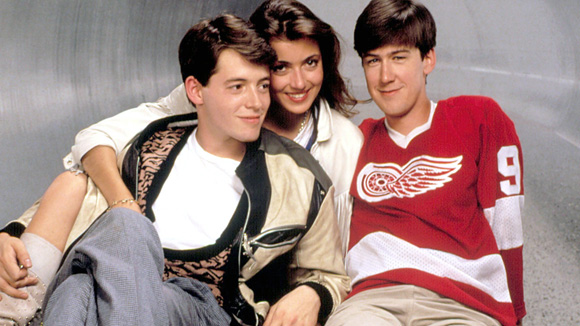
I hope you have had the joy of watching classic ‘teen movies.’ Not sparkly-vampire infested ones, but classic, quotable, bad-hair featuring ones. Movies like The Breakfast Club and Ferris Bueller’s Day Off, Juno and Clueless. There’s something about the boundless opportunity and optimism of the characters, even when they are forced to spend a whole Saturday in detention, that seems to me to be the thing I miss about teenager-hood. The feeling that the world really is your oyster and that any kind of creative, random, unexpected thing could happen. Too often, this feeling is drowned out in me by jaded, perfunctory, grown-up-ness.

My renewed youth has also been fed by teen-fiction. Yes, that’s right. Sounds terrible doesn’t it. But when I think that I was eagerly awaiting the last Harry Potter book or two well into my twenties it’s not all that surprising. I was totally gripped by The Hunger Games trilogy, loved The Perks of Being a Wallflower and, damn it, was holding back tears reading The Fault in our Stars. There’s something about the intensity of feeling, the ‘universe is centred around me and how I feel right now’ perspective of these characters, as well as the ‘this friendship will never be the same again’ sadness, that makes these books so appealing in many ways. Or maybe just easier to read.

As I think about the future and the possibilities before me, are they really less vast than those I imagined (or not) when I was an actual teenager? Is it not a positive thing to seek to enjoy every moment, eager to await each surprise, rather than dreading the next hiccup? If nothing else, this teenage flashback has reminded me that God has been faithful to me up to now, so much more than I could have expected. Whatever is to come, I look forward to enjoying his goodness and the gifts, whether as big as a new job or a child, or as small as a sunny day and an ice lolly, that he generously gives. And when it’s hard, it will be OK, because time goes on and he is faithful.

“Life moves pretty fast. If you don’t stop and look around once in a while, you could miss it.” Ferris Bueller

Ferris-Buellers-Day-Off-09